Treat the checks as the main detail
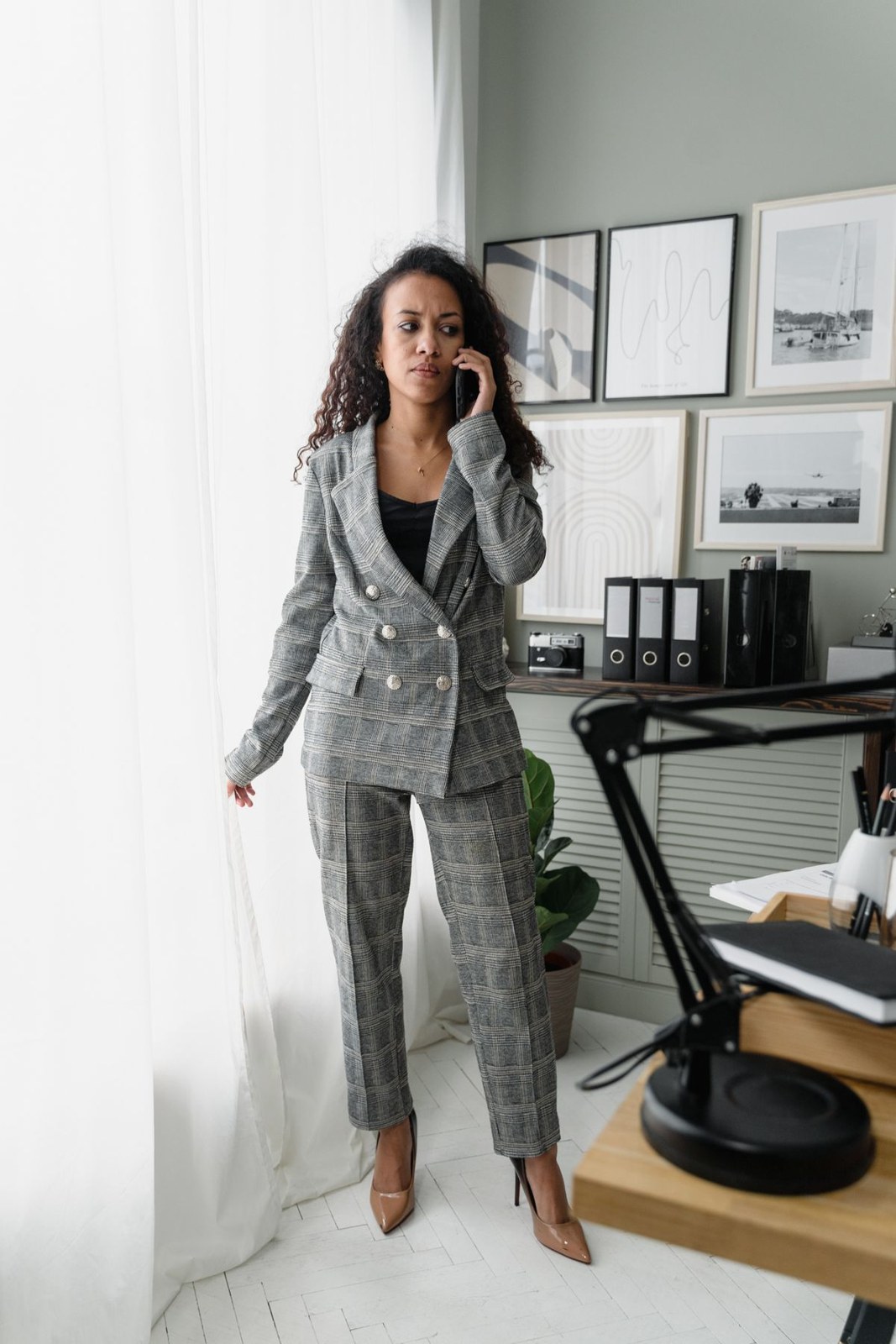
A grey checked trouser suit already provides a recognisable pattern across two large areas. A simple dark top can create quiet underneath. Assess the checks in daylight and from a little distance so you see the whole combination. A small unpatterned bag or folder is enough as a first addition. You do not need to repeat one exact check colour in every accessory or introduce another pattern to complete the outfit.
Test the double-breasted front fastened
A double-breasted blazer has an overlapping front. Use the intended fastening, sit and reach forward. The buttons should not be under strong tension. Check the open arrangement too if you may wear it that way during the working day. Its fronts can behave differently from a single-breasted style. What matters is the actual fit rather than the number of buttons alone. Keep your normal posture during the assessment.
Choose trousers for movement
Sit in the trousers and test the waistband, knees and pockets. A pattern can make pulling easier to see, but it is not a standard for a particular body shape. Check instead whether the cut leaves enough room. Then choose shoes and assess the hem. Pale pointed shoes can create a quiet contrast; another comfortable pair remains possible if you judge the length again. Include walking as well as sitting.
Keep the suit flexible in use
The dark top should provide your preferred coverage alone if you remove the blazer. For the commute, try an outer layer over the complete suit. Sleeves and shoulders still need space. Keep heavier belongings in a separate bag so pocket contents do not change the jacket front. To use the pieces independently later, test the blazer with plain trousers and the suit trousers with a smooth top. This gives the set more than one practical role.