Choose a colour family rather than a uniform
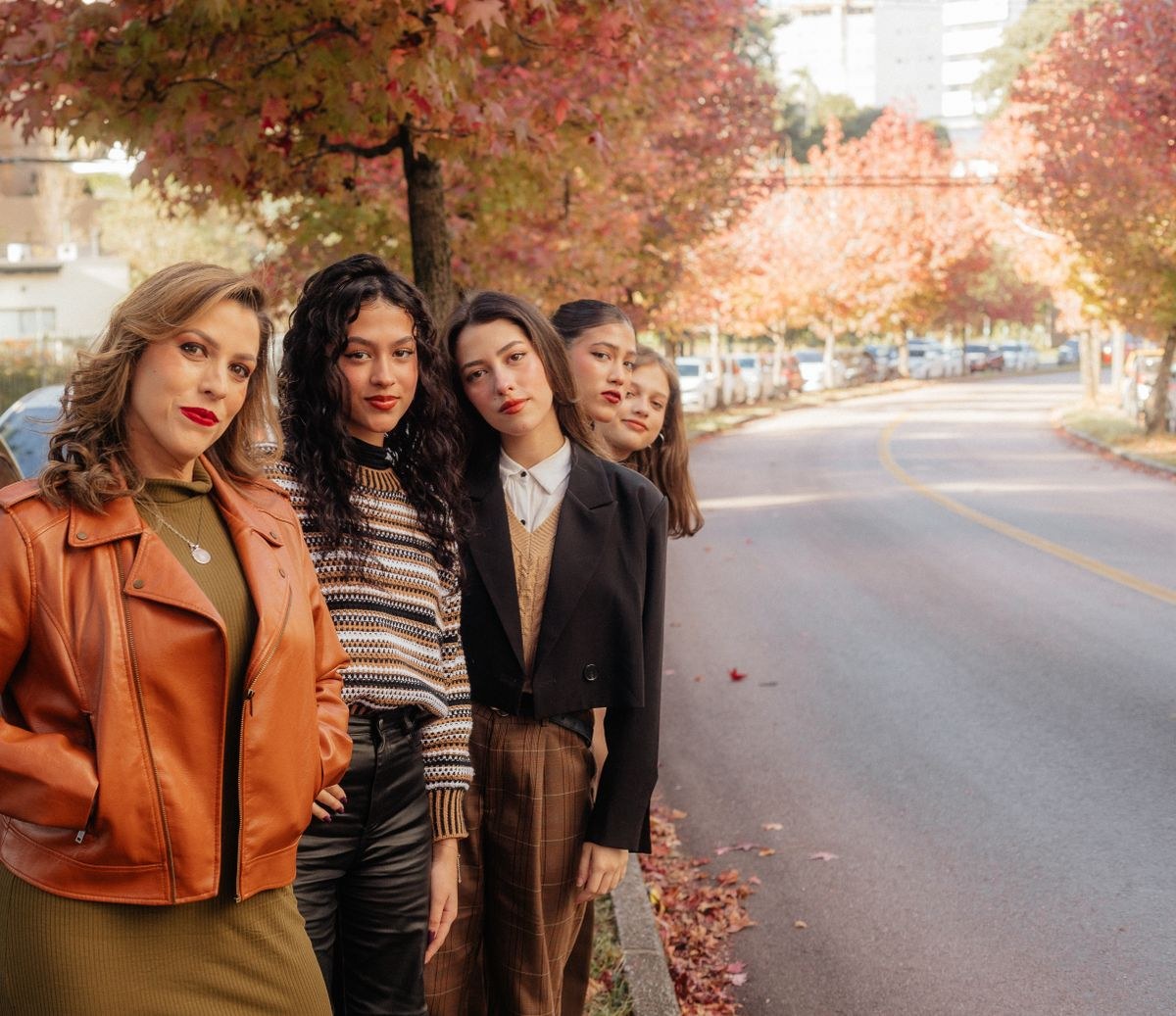
The group portrait shows different autumn upper layers: a tan jacket, a brown striped sweater and neutral blazers. The people are not wearing identical combinations. Warm, restrained colours connect the picture rather than one compulsory garment everyone would need to copy.
For your own outfit, two related shades may be enough, such as tan and dark chocolate brown. A cream top can sit between them. When two browns look almost alike, compare them in daylight; a deliberate light-and-dark difference is often easier to coordinate than an accidental near match.
Distribute stripes and plain areas
A striped sweater already introduces a visible pattern. Wear a quieter jacket over it if you want a calm result. With a plain tan jacket, the top could instead provide the pattern. You do not need several prints simply because the group photograph contains several different garments.
Check sleeve room when adding a layer. A blazer that fits comfortably over a thin blouse may become tight over a substantial sweater. If fabric gathers in the arms, choose a lighter inner layer or a roomier jacket rather than repeatedly pulling the knit down through the sleeves.
Complete the unseen lower half yourself
Dark jeans or straight trousers are possible everyday additions. Choose shoes you enjoy wearing for the route you have planned. Pale trousers create more contrast and can make the brown upper layers feel visually lighter without repeating every colour.
Choose shoes and outerwear for your route, temperature and possible rain. A warm palette says nothing certain about the garments' actual warmth. For a group occasion, agree on a palette while allowing each person to choose suitable cuts and pieces they already own; coordinated does not mean identically dressed.