Read the two looks separately
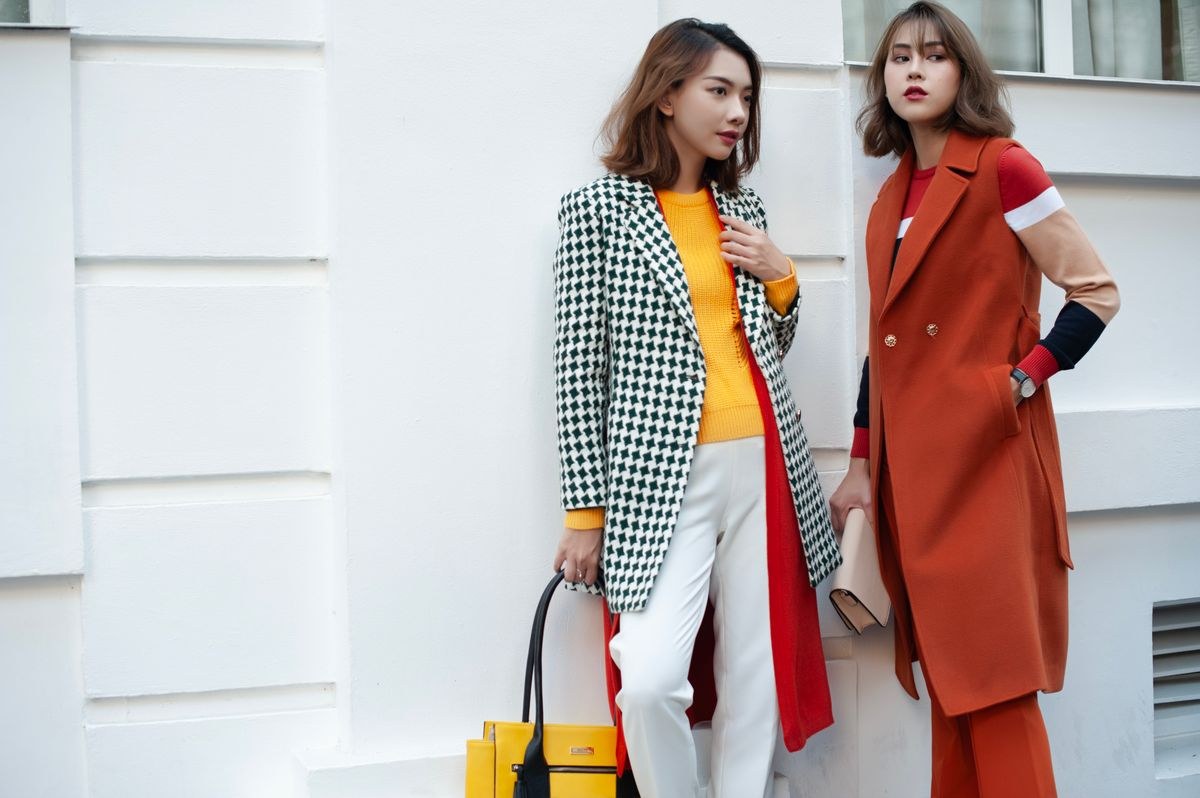
The photograph places two ideas together: a checked coat with a mustard top, white trousers and a yellow bag, and a rust-orange long vest with coordinating trousers and black gloves. Compare their effects first instead of combining every detail into one outfit.
Contrast or a connected colour
The first distributes colour between the top and bag, while the pale trousers create a clear break. The second uses the vest and trousers as a connected area of colour. That repetition is useful if you prefer less contrast; the white-trouser version offers a visibly lighter combination.
A coat and vest do different jobs
A coat covers the arms as well as the body. A long vest needs a deliberate layer underneath when conditions are cool. Choose sleeves that allow the vest to fall smoothly and let you move without pulling. Gloves do not replace a missing warm layer around the arms.
With either option, check the length while sitting. A long outer garment can gather beneath you on a bench or complicate stairs. Side openings may help movement, but not every piece includes them. Examine the actual garment before relying on it for a long day out.
Borrow the colours with pieces you own
For the coat version, try a mustard top and pale trousers with a checked coat already in your wardrobe. The bag can stay neutral if another yellow area feels excessive. A plain top is particularly helpful beneath a prominent check because it keeps the open front relatively calm.
For the vest version, the trousers do not have to match the rust shade exactly. Dark brown or black makes a different, clear combination. Aim for an intentional difference rather than an almost-matching set. Footwear, weather suitability and fabric composition cannot be inferred from the palette; choose those for your real journey and conditions.