Repeat the pale shoes within the print
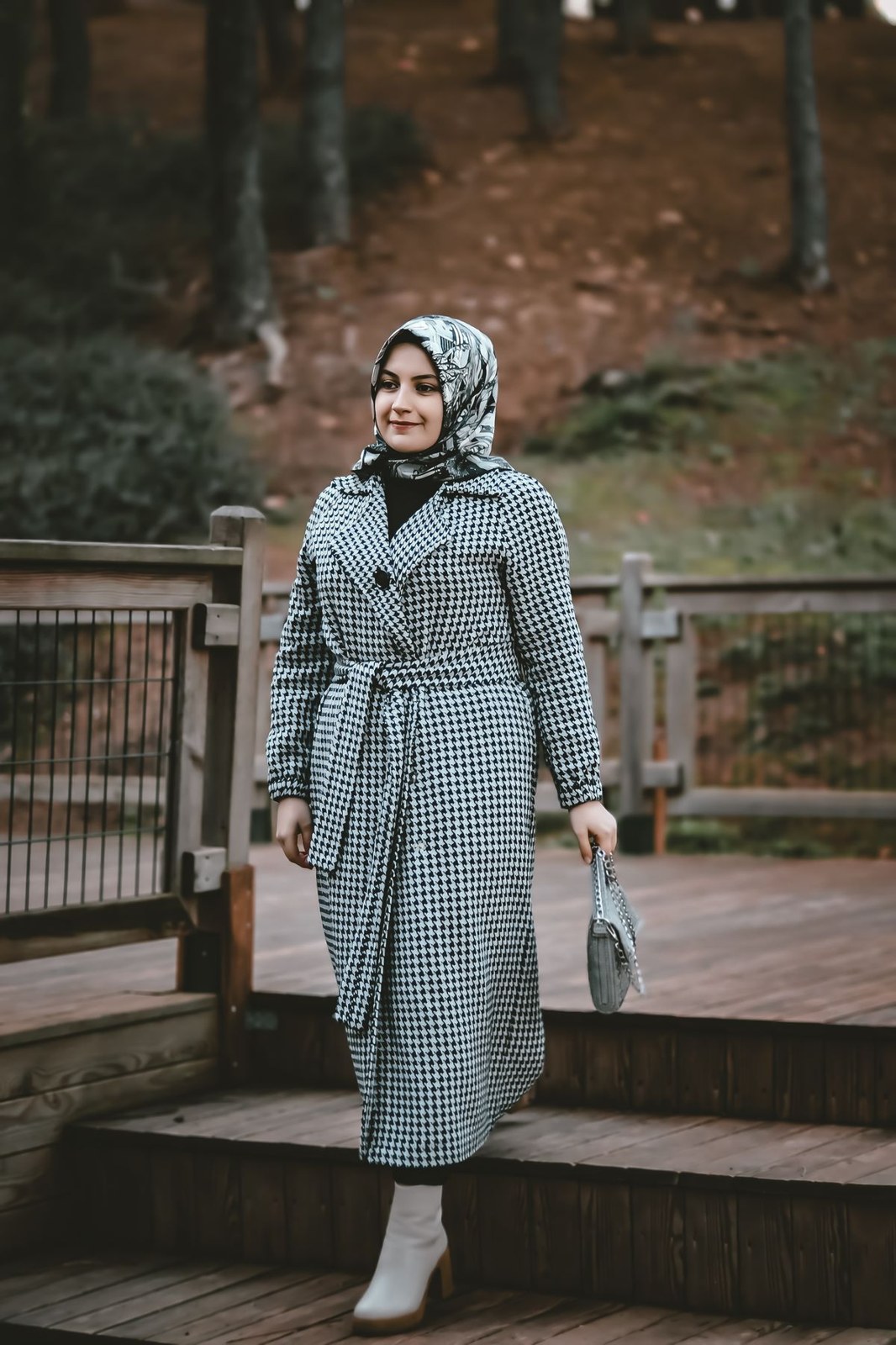
The white ankle boots connect with the grey-and-white gingham dress because white already appears in the pattern. They read as part of the combination rather than an unrelated bright finish. The small silver-coloured bag continues the cool palette without adding another large block of colour.
You do not need to match every accessory precisely. A cream bag could also work, although a strongly yellow cream creates a visible contrast beside clear white. Try the pieces together in daylight and decide whether you want that difference rather than discovering it after leaving home.
Check the belt where it actually sits
The belt gathers the shirt dress at the waist. Tighten it only until the button front and surrounding fabric sit comfortably. If gaps appear between buttons or the skirt pulls sharply upward when you sit, loosening the belt is more useful than repeatedly adjusting the fabric.
The hem and boot height also affect the result. A midi dress may almost meet a taller ankle-boot shaft. That can look intentional; it does not need correcting automatically. Choose a shorter shaft or flat shoe for more visible space, or keep the transition covered when the day feels cooler.
Make the headscarf and weather choices practical
The black-and-white headscarf echoes the graphic quality of the checks. If you borrow that detail, keep other patterns and jewellery relatively quiet. A plain hairband or no hair accessory offers an equally workable alternative, with the dress remaining the clearest element.
For a chilly spring morning, add a simple jacket without a competing checked print. Before a long walk, consider the boots and the ground. White footwear does not acquire a different fit or weather rating because of its colour; the material, sole and care guidance matter more when rain is likely.