Use the blazer as a clear colour area
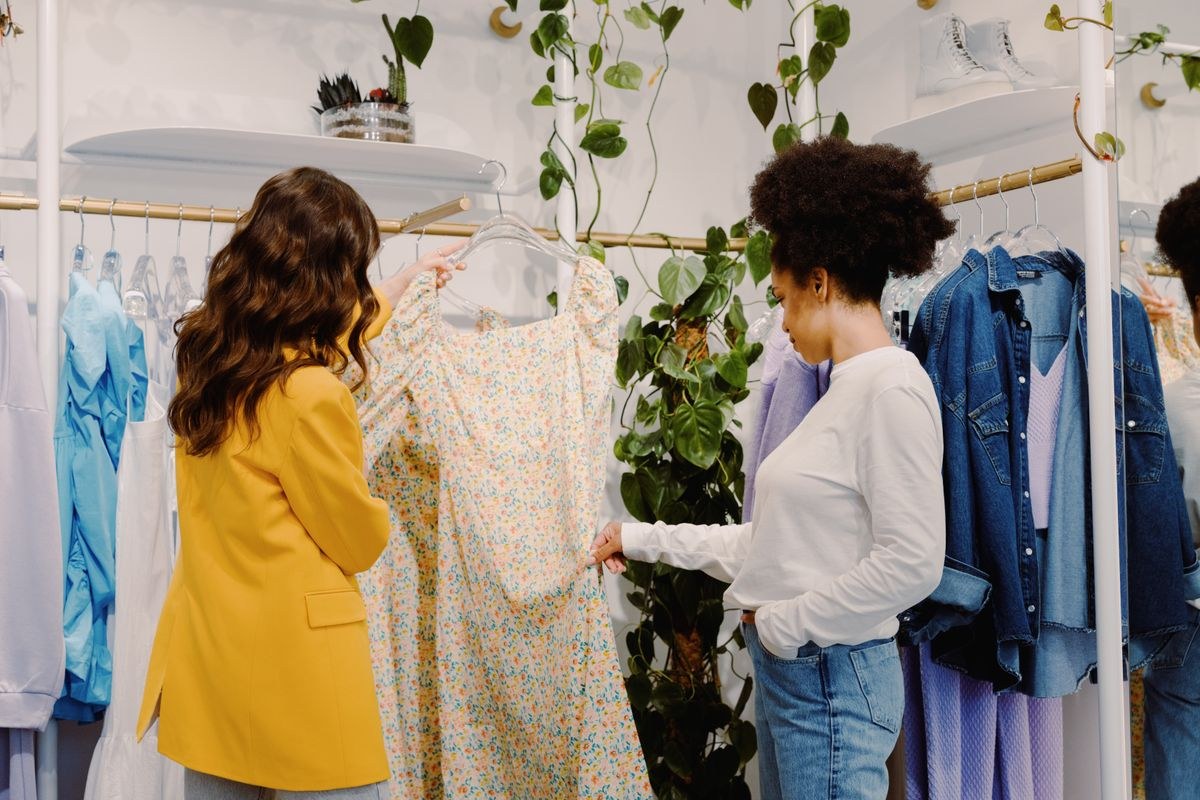
The shop photograph shows a yellow blazer with pale patterned trousers, alongside a white blouse and blue jeans. A plain pale top could complete the yellow combination without making the blazer and trousers compete with a third prominent area.
First consider how noticeable the trouser pattern is from an ordinary viewing distance. A fine pattern reads differently from large contrasting shapes. If the two pieces feel too lively together, replace the trousers with a plain pale pair. The yellow blazer then remains the clear focus without losing its effect.
Keep the sleeves and waistband practical
A blazer needs to fit over the top while moving as well as standing. Reach your arms forward and sit, particularly if you plan to wear it at work or on a journey. Pushing up the sleeves does not resolve shoulders that pull uncomfortably.
Choose a top hem that works comfortably at the waistband. A full tuck may sit neatly with thinner fabric, while a thicker hem can create bulk. Try a relaxed untucked version too. Check pale trousers in daylight and while moving rather than relying only on the warm lighting of a fitting room.
Borrow a quieter alternative from the picture
The white blouse and blue jeans in the same photograph suggest a more restrained direction. Try the yellow blazer over that foundation if you want colour without the patterned trousers. One piece then takes the prominent role, giving existing jeans another useful combination.
For mild spring days, choose the actual layers according to temperature rather than the yellow colour. Closed flats or simple sneakers are possible additions for a day with several journeys; the picture does not establish a compulsory pair. Keep the bag neutral initially and see whether the outfit already feels complete before introducing further accent colours.